
A property manager in Calgary’s Foothills Industrial Park learned an expensive lesson in 2021. The 40,000 square foot warehouse she managed had gone nearly five years without a roof inspection. Budget constraints, she explained. The roof looked fine from the parking lot. No leaks had been reported.
Then a tenant noticed water stains on inventory stored near the back wall. By the time a roofer got up there to investigate, moisture had been infiltrating the roof assembly for at least two years. The membrane looked intact on the surface, but water had been pooling beneath it, saturating the insulation and rotting the deck in multiple locations. Total repair bill: $187,000. The inspection that would have caught the problem early? Around $400.
Commercial roofs don’t fail dramatically. They fail slowly and quietly, often without visible signs until damage becomes severe. Regular inspections are the only reliable way to catch problems while they’re still affordable to fix.
Commercial Roofs Are Different
Most commercial buildings in Calgary have flat or low-slope roofs covered with membrane systems. These commercial roofing systems behave very differently than the steep-slope shingled roofs on residential properties.
For one thing, water doesn’t run off quickly. It pools. Even properly installed commercial roofs develop areas where water collects after rain or snowmelt. Those ponding areas stress the membrane, accelerate UV degradation, and create conditions for biological growth. Small defects that would drain harmlessly on a sloped roof become entry points for moisture on a flat one.
Commercial roofs also carry more penetrations. HVAC units, exhaust fans, plumbing vents, electrical conduits, skylights, access hatches. Every penetration requires flashing and sealant that can fail over time. A typical commercial roof might have dozens of these potential failure points, each one invisible from ground level.
What Goes Wrong Without Inspections
Commercial roof failures follow predictable patterns. Understanding these patterns shows why inspections matter so much.
Membrane damage is the most common issue. Foot traffic from HVAC technicians, window washers, and maintenance personnel takes a toll over time. Tools get dropped. Equipment gets dragged across surfaces. Each incident might seem minor, but accumulated damage compromises the membrane’s integrity. An inspector looks for scuffs, punctures, and worn areas that indicate traffic patterns and potential weak points.
Flashing failures happen gradually. The sealant around roof penetrations dries out, cracks, and separates. Seasonal expansion and contraction work metal flashing loose from adjacent surfaces. These failures rarely announce themselves with immediate leaks. Water enters, travels along the deck, and damages the structure far from the actual entry point.
Drainage problems develop as roofs age. Drains clog with debris. Scuppers get blocked. Low spots deepen as insulation compresses under ponding water. What started as minor pooling becomes standing water that stays for days or weeks after precipitation, stressing the membrane and adding significant weight to the structure.
The Calgary Factor
Calgary’s climate creates specific challenges for commercial roofs that make regular inspections even more critical.
Temperature extremes stress roofing materials constantly. Summer surface temperatures on dark commercial membranes can exceed 70°C. Winter temperatures drop to minus 30 or colder. That 100-degree swing happens every year, repeatedly expanding and contracting every component of the roof system. Seams separate. Fasteners back out. Flashing pulls away from walls.
Hail is another Calgary specialty. The city sits in one of the most active hail corridors in North America. Commercial membranes can handle moderate hail, but larger stones cause damage that often isn’t obvious from visual inspection alone. Impact points may not puncture through immediately but create weakened areas that fail months later.
Chinooks add another variable. Rapid freeze-thaw cycles stress roofing systems in ways that gradual temperature changes don’t. Snow melts quickly, floods the drainage system, then refreezes before it can clear. Ice forms in drains and scuppers, backing water onto the roof surface. Experienced commercial roofing contractors in Calgary know exactly where to look for chinook-related damage that out-of-town inspectors might miss.
What Professional Inspections Include
A proper commercial roof inspection goes far beyond walking the surface and looking for obvious damage. It’s a systematic evaluation of every component that affects roof performance.
Inspectors examine the membrane itself for blistering, cracking, ridging, and punctures. They check all seams and laps for separation or deterioration. Every penetration gets individual attention, with flashing and sealant evaluated for current condition and remaining service life.
Drainage components get thorough review. Drains are checked for proper flow and debris accumulation. Scuppers and overflow drains are evaluated for capacity and condition. Low spots are noted and measured. Inspectors look for evidence of ponding water, including staining patterns, algae growth, and debris accumulation in low areas.
Edge details matter too. Coping, fascia, and edge metal are examined for secure attachment and proper sealing. Parapet walls get checked for cracks and deterioration that could allow water entry. Any wall flashing transitions receive careful scrutiny since these are common failure points.
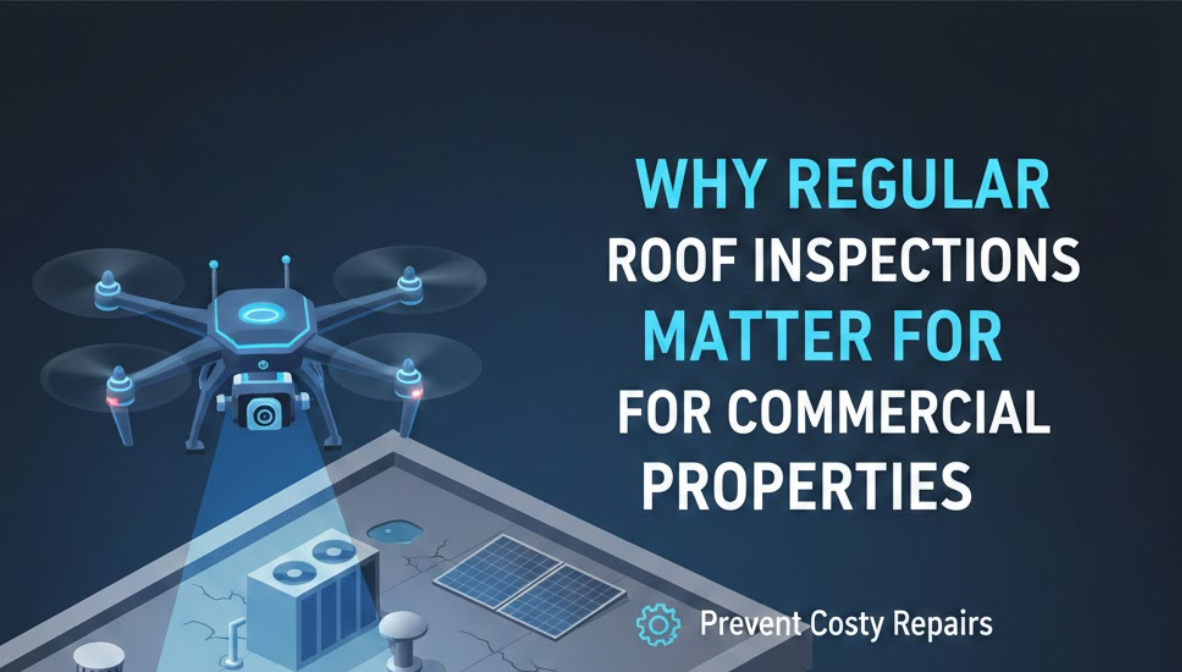
Many inspectors now use infrared thermal imaging to detect moisture trapped in the roof assembly. Wet insulation shows different thermal characteristics than dry insulation, allowing inspectors to map moisture infiltration that wouldn’t be detectable through visual inspection alone.
How Often Is Enough
Most commercial roofing experts recommend inspections twice per year: once in spring after freeze-thaw season ends, and once in fall before winter sets in. This schedule catches damage from winter conditions before summer UV exposure makes it worse, and identifies fall maintenance needs before snow makes the roof inaccessible.
Additional inspections make sense after significant weather events. Major hailstorms, unusually high winds, or heavy snow loads all warrant follow-up inspection even if regular scheduled inspections were recent. The cost of an extra inspection is trivial compared to undetected storm damage that worsens over months.
Older roofs may need more frequent attention. As roofing systems age, the interval between small problems and significant failures shortens. A ten-year-old membrane might tolerate a minor flashing separation for a full season. A twenty-year-old membrane in the same condition could fail catastrophically with the next heavy rain.
The Financial Argument
Property owners sometimes view roof inspections as optional expenses rather than essential maintenance. Running the numbers usually changes that perspective.
A typical commercial roof inspection costs between $300 and $800 depending on building size and complexity. Two inspections per year runs maybe $1,000 to $1,500 annually. Over a 20-year roof lifespan, that’s $20,000 to $30,000 in inspection costs.
Now consider the alternative. The average commercial roof replacement in Calgary runs $8 to $15 per square foot. That 40,000 square foot warehouse needs $320,000 to $600,000 when replacement time comes. Catching problems early through regular inspections can extend roof life by 5 to 10 years. That’s potentially hundreds of thousands in deferred capital expenditure.
Then factor in avoided interior damage. Water infiltration damages inventory, equipment, and tenant improvements. Business interruption during emergency repairs costs money. Insurance claims affect premiums. Tenant relationships suffer when leaks disrupt operations. The inspection that catches a problem before it causes interior damage pays for itself many times over.
Choosing the Right Inspector
Not all roof inspections deliver equal value. The quality of information depends heavily on who’s doing the looking.
Look for inspectors with specific commercial roofing experience. Residential roofers may be excellent at what they do but lack familiarity with commercial membrane systems, built-up roofing, and the particular failure modes these systems exhibit. Commercial roofing is genuinely different and requires different expertise.
Local experience matters significantly in Calgary. Someone who’s inspected commercial roofs through multiple Calgary winters understands chinook damage, hail impact patterns, and how local conditions affect different roofing materials. That knowledge informs where they look and what they look for. Superior Roofing Ltd. has been evaluating commercial properties across Calgary for years and brings that accumulated local knowledge to every inspection.
Request sample reports before committing. Quality inspection reports include photographs documenting conditions, specific location mapping of issues found, severity ratings for identified problems, and recommended actions with timeframes. A one-page summary saying “roof looks okay” provides little value for the investment.
Beyond Inspections: Maintenance Programs
Regular inspections work best as part of a comprehensive maintenance program rather than standalone events. Identifying problems is only valuable if those problems actually get fixed.
Many commercial roofing contractors offer maintenance agreements that bundle inspections with routine upkeep. These programs typically include scheduled inspections, debris removal, drain clearing, minor repairs, and documentation that satisfies warranty requirements and insurance expectations.
For property owners managing multiple buildings or those without in-house maintenance expertise, these programs simplify roof care significantly. One contract, one point of contact, consistent documentation, and problems addressed before they escalate. Connecting with a commercial roofing specialist to discuss maintenance options often reveals cost-effective approaches that individual property owners might not know to ask about.
An Ounce of Prevention
That property manager in Foothills Industrial now schedules inspections religiously. Twice a year, every year, without exception. She’s found minor issues that got fixed for a few hundred dollars each. Nothing has escalated to anywhere near that original $187,000 disaster.
Commercial roofs represent significant investments. They protect even more significant investments underneath them. The only way to know what’s actually happening up there is to look regularly, systematically, and with qualified eyes. Everything else is just hoping for the best.
Hope isn’t a maintenance strategy. Regular inspections are.